
Currently Empty: $0.00
MBBS from The Avicenna Tajik State Medical University Tajikistan
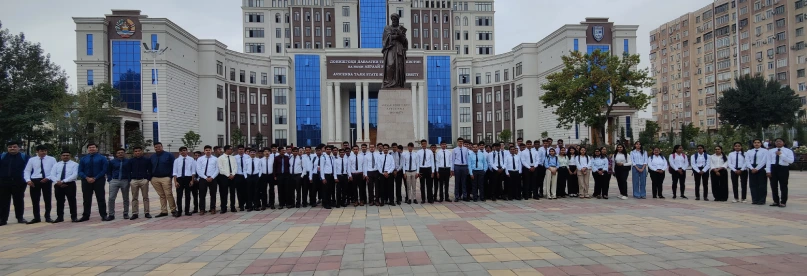
Avicenna Tajik State Medical University (ATSMU) is a government medical university located in Dushanbe, Tajikistan. Established in 1939, the university is named after the renowned scholar Abuali Ibn Sino, also known as Avicenna. It is one of the prominent medical education institutions in Tajikistan and functions under the Ministry of Health of the Republic of Tajikistan.
ATSMU is recognized as a major educational, scientific, and clinical training center in the country. Over the years, the university has played an important role in preparing qualified medical professionals and specialists in various fields of medicine.
By the beginning of 1989, the institution had developed a strong academic foundation, with 51 specialists and 326 candidates of sciences working across various departments. During this period, the university had 70 departments and 10 academic courses, reflecting its growing role in medical education, research, and professional training.
In 1992, the Tajik State Medical Institute was granted university status and was renamed Avicenna Tajik State Medical University. Until 2009, ATSMU offered a six-year medical program for training medical professionals. In 2010, the university introduced a five-year MBBS program with internship for international medical students.
ATSMU has been actively involved in scientific research projects of national and international importance. The university is also considered a respected host for international scientific conferences, seminars, and symposiums held in different fields of medical science.
The university is associated with international medical education platforms, and its graduates may become eligible for further studies and licensing pathways abroad, subject to the rules and requirements of the respective country. ATSMU has also been recognized for its historical academic importance, and during Tajikistan’s association with the former USSR, it was regarded as one of the significant medical education institutions in the region.
ATSMU offers education in medicine, paramedical sciences, allied health sciences, and other medical disciplines. The university focuses on both theoretical knowledge and practical clinical exposure, helping students build a strong foundation for their medical careers.
The university is supported by modern academic infrastructure, well-equipped laboratories, clinical facilities, research centers, and hospital-based training opportunities. It is associated with a 1,200-bed super-specialty hospital equipped with modern facilities and advanced medical equipment, providing students with valuable hands-on exposure to patient care and clinical practice.
With its long academic legacy, experienced faculty, research-oriented environment, modern infrastructure, and strong clinical training facilities, Avicenna Tajik State Medical University continues to be a preferred destination for students seeking quality and affordable medical education in Tajikistan.
Infrastructure:
Avicenna Tajik State Medical University (ATSMU) is a reputed government medical university located in Dushanbe, Tajikistan. Established in 1939, the university is named after the renowned Persian polymath Abuali Ibni Sino, also known as Avicenna. ATSMU is managed by the Ministry of Health of the Republic of Tajikistan and is one of the leading higher medical education institutions in the country, dedicated to preparing qualified medical professionals for Tajikistan and abroad.
The university has modern educational buildings, clinics, laboratories, and advanced academic infrastructure. ATSMU includes five major faculties: Medicine, Pediatrics, Dentistry, Pharmacy, and Public Health. The university has 63 departments and a highly educated academic and professional team that supports quality medical education, research, and clinical training.
ATSMU is also equipped with scientific and clinical centres, a Stem Cells Laboratory, an Evidence-Based Medicine Centre, a Drug Information Centre, and educational-clinical facilities. These facilities help students gain strong theoretical knowledge, practical exposure, and research-based learning in different areas of medical science.
Since its establishment in 1939, Avicenna Tajik State Medical University has educated more than 35,000 highly skilled medical professionals. Its graduates are working not only in Tajikistan but also in different countries across the world, contributing to healthcare and medical services at national and international levels.
The Medical University of Tajikistan has successfully developed academic and professional cooperation with more than 40 countries, including the Russian Federation, CIS countries, England, Germany, the USA, Iran, Afghanistan, China, Turkey, India, Yemen, and several African countries. Through this international collaboration, the university continues to strengthen its role in global medical education and scientific development.
Medical scientists associated with ATSMU contribute to improving the organization and quality of scientific research. Their work supports the practical implementation of research findings in healthcare institutions and public health systems. This helps in developing effective preventive and medical measures to protect and improve the health of the population, while considering the climatic, geographical, and demographic conditions of Tajikistan.
One of the primary goals of Avicenna Tajik State Medical University is to align the national medical education system with international standards. The university works toward improving the structure, content, duration, and quality of professional medical training so that Tajikistan can actively participate in the global medical education community.
ATSMU also focuses on expanding international cooperation in the training and professional development of medical staff. The university continuously works on improving the quality of medical education, upgrading academic standards, and developing new curricula and programs according to the requirements of the World Federation for Medical Education.
Great attention is given to maintaining and improving the overall quality of medical education and professional training. With its modern infrastructure, experienced faculty, research facilities, international collaborations, and strong clinical learning environment, Avicenna Tajik State Medical University continues to be a trusted destination for students seeking quality medical education in Tajikistan.
Why to choose Avicenna Tajik State Medical University
- Excellent infrastructure The college has cutting-edge infrastructure and laboratories with advanced equipments.
- Skilled professors The faculties in college are highly skilled and experienced
- Cost of Living The cost of living in Tajikistan is very affordable
- Medium of Study The mode of education is in English, which makes it easier for international students.
- Safety and security There is separate accommodation for boys and girls with full security.
- Affordable fee The MBBS tuition fee in Avicenna Tajik State Medical University is comparatively low and affordable.
- No Entrance Exam For MBBS admission in Avicenna, there is no entrance exam is required.
- No donation Avicenna University doesn’t charge any donation or capital amount for MBBS admission.
- Exclusive Benefits of studying MBBS in Avicenna Tajik State Medical University:
- Avicenna Tajik State Medical University provides education in the English language.
- There is no donation fee or additional charge to get MBBS admission in Avicenna.
- Faculty members of Avicenna University are highly experienced and skilled in their fields.
- Avicenna Tajik State Medical University engages its students in a range of cultural and extracurricular activities.
- For Indian students who study MBBS in ATSMU, Tajikistan Indian food and Indian hostels are available.
- In Avicenna Tajik State Medical University tuition fees are very low, affordable, and provide a great exposure to clinical settings.
- Many hospitals in Tajikistan are affiliated with Avicenna, where the Indian students can gain practical experience.
- The medical degrees obtained at Avicenna Tajik State Medical University are internationally recognized and also by WHO.
- In Avicenna Tajik State Medical University, the class size is limited. Hence each student receives individualized attention from the teachers.
- Upon completion of the MBBS program from Avicenna Tajik State Medical University, the Indian students may practice medicine in government hospitals in the same country.
- ATSMU satisfies all the NMC norms and thus, the Indian students can practice in India after they complete MBBS in Tajikistan if they clear FMGE / NeXT examination.
Affiliations and Recognitions of Avicenna Tajik State Medical University:
- World Health Organization (WHO)
- World Federation for Medical Education (WFME)
- Foundation for the Advancement of Medical Education and Research (FAIMER)
- Organization of PhD training programs in the field of biomedical and medical sciences in the European system (ORPHEUS)
- Association for Medical Education in Europe (AMEE)
- Association of Medical Universities of the Kyrgyz Republic (AMUKR)
- Association of Medical Schools in Europe (AMSE)
- Asian Medical Education Association (AMEA)
- International Network of Higher Education Quality Assurance Agencies (INQAAHE)
- International Federation of Medical Students Association (IFMSA)
- Asia Pacific Quality Network (APQN)
- Asian Medical Students Association (AMSA)
MBBS Duration at Avicenna Tajik State Medical University:
Avicenna Tajik State Medical University offers a six-year MBBS program, which includes five years of academic medical education followed by one year of internship. The curriculum is designed to meet the required standards and guidelines of the National Medical Commission (NMC), India.
Indian students also receive valuable clinical exposure through practical training and internship opportunities at university-affiliated hospitals, helping them gain real-world medical experience after completing their theoretical studies.
Avicenna Tajik State Medical University Fees Structure:
Studying at Avicenna Tajik State Medical University is a cost-effective option for students planning to pursue MBBS abroad. The university offers an affordable fee structure compared to many other popular medical universities.
In addition, the cost of living in Tajikistan is comparatively low, making it easier for students to manage accommodation, food, and daily expenses comfortably. The admission process is also simple and hassle-free, making Avicenna a practical choice for Indian students seeking quality medical education at an affordable budget.
The basic eligibility for MBBS in Avicenna Tajik State Medical University:
Age requirement: To take MBBS admission in Avicenna Tajik State Medical University, the student should be minimum 17 years old
Qualification: Students who are keenly interested in MBBS from ATSMU should have completed higher secondary education with subsequent subjects such as Physics, Chemistry, Biology and English.
Minimum required percentage: Minimum 50% marks are required in 10+2 by the recognized board of council.
NEET requirement: The candidates must have qualified NEET-UG examination, in case of Indian aspirants to practice in India through FMGE / NeXT.
The student should have a Valid passport.
Process to Get MBBS admission for Indian Students in Avicenna Tajik state Medical University, Tajikistan Through Shri Hari Consultancy:
The admission process for the MBBS program at Avicenna Tajik State Medical University is simple and well-structured. To secure admission, students are required to meet the basic eligibility criteria set by the university, which is mandatory for all international applicants.
The university does not conduct any entrance examination for MBBS admission. However, students must strictly fulfill the prescribed eligibility requirements. Admissions are granted on a first-come, first-served basis, depending on seat availability.
Once admission is confirmed at Avicenna Tajik State Medical University, Tajikistan, our documentation team provides complete assistance throughout the process. From completing admission formalities to guiding students for smooth travel and boarding, we ensure a hassle-free experience for students beginning their MBBS journey in Tajikistan.
Benefits of Studying MBBS in Tajikistan
Top Class University:
Medical universities and colleges in Tajikistan offer modern infrastructure and advanced facilities, providing students with a well-rounded educational experience similar to reputed medical institutions in India.
The medical colleges in Tajikistan are equipped with modern amenities, experienced faculty, and a structured academic environment that supports quality medical education. These universities also offer internationally recognized medical degrees, helping students build a strong foundation for a successful medical career globally.
In addition to academics, MBBS universities in Tajikistan give strong importance to the safety and security of international students. Indian students are provided with a comfortable and secure environment, helping them feel confident and at home while pursuing their medical education in a foreign country.
Use of English language:
To make MBBS education more accessible and convenient for international students, including Indian students, many medical universities in Tajikistan use English as the primary medium of instruction and communication.
This is a major advantage for students who wish to study medicine abroad, as it helps them understand lectures, interact with faculty, and adapt to the academic environment more easily.
However, students are also encouraged to learn basic local language skills, as it can be helpful during clinical practice, patient interaction, and day-to-day communication while living in Tajikistan.
Cost of MBBS in Tajikistan:
The cost of pursuing MBBS abroad is often comparable to, and in many cases lower than, the fees charged by private medical universities in India. Tajikistan has become a preferred destination for medical education due to its affordable tuition fees and budget-friendly living expenses.
Medical colleges in Tajikistan offer quality education at a reasonable cost, making them a practical option for students who want to pursue MBBS without excessive financial burden. After successfully completing the MBBS program and fulfilling the required licensing or regulatory conditions, students may also get the opportunity to practice medicine in the host country.
?More number of seats for MBBS in Tajikistan:
Due to the limited number of government medical seats in India, and high tuition fees at private universities, a lot of MBBS aspirants are unable to pursue their dream of studying MBBS in India. However, international medical universities have been able to tap into this student group simply by keeping their tuition fees low, education standards high, and above all providing a larger number of seats as compared to their government counterparts in India. Avicenna Tajik State Medical University is one among them offer MBBS at low fee for Indian Students.
Scholarships and Financial Aid:
To promote a healthy flow of students coming into foreign countries to study MBBS abroad, universities and colleges in Tajikistan have announced several scholarships and financial grants to students to encourage studying MBBS in Tajikistan within their budget. Students can check the list of scholarships available to them to pursue MBBS study abroad.
?Global Job Opportunity:
The students who are studying MBBS Abroad gets ample opportunity to apply for jobs in any part of the world. Once they obtain the certificate to practice anywhere in the world, they can get the country-wise certificate as well to be able to practice medicine after their graduation.
Geography and Climate in Tajikistan
Geography:
Tajikistan is a landlocked country located in Central Asia, bordered by Afghanistan to the south, China to the east, Kyrgyzstan to the north, and Uzbekistan to the west and northwest. The country is known for its rugged mountain landscapes, natural beauty, and rich cultural heritage.
Tajikistan is especially famous for its mountain ranges, which attract visitors interested in hiking, trekking, and climbing. The Fann Mountains, located near the capital city Dushanbe, are among the country’s most popular natural attractions, with snow-capped peaks rising above 5,000 meters.
One of the major highlights of the region is Iskanderkul, a beautiful turquoise lake formed by glaciers. The surrounding area is known for its scenic beauty and diverse birdlife, making it a notable destination for nature lovers.
The country covers an area of approximately 141,400 square kilometers and has a population of around 9.5 million people. Tajikistan also holds historical importance, as the ancient Silk Road passed through the region, connecting it with major trade and cultural routes of Asia.
Unlike many of its Central Asian neighbors, Tajikistan has a predominantly Persian cultural influence, making its language, traditions, and heritage unique in the region.
About Dushanbe City:
- Dushanbe is the capital and largest city of Tajikistan.
- Dushanbe has a population of 863,400, and that population is largely Tajik.
- Dushanbe is located in the Gissar Valley, bounded by the Gissar Range in the north and east and the Babatag, Aktau, Rangontau and Karatau Mountains in the south, and has an elevation of 750–930 m.
- Dushanbe features a Mediterranean climate with some humid continental climate influences due to the nearby glaciers and mountain ranges. The city features hot summers and chilly winters.
Climate:
Dushanbe, the capital city of Tajikistan, experiences a climate influenced by both Mediterranean and humid continental conditions, mainly due to its surrounding mountains and nearby glaciers.
The city has hot summers and cool winters. Compared to many other Central Asian capitals, Dushanbe receives relatively higher rainfall, especially during winter and spring, as moist air is directed into the valley by the surrounding mountain ranges.
Winters in Dushanbe are generally milder than areas located north of the Gissar Range, as the mountains help protect the city from extremely cold Siberian winds. Snowfall does occur, but winter precipitation is more commonly seen as rain rather than heavy snow. The surrounding mountains also reduce the impact of strong winds, although light breezes are common throughout the year.
The winter season usually begins in early December and continues until late February. Spring starts around late February and lasts until mid-May. During spring, rainfall, thunderstorms, and occasional hail are more frequent, making it the wettest and most active weather period of the year.
Summer begins around mid-May and continues until mid-August. This season is generally warm, dry, and suitable for agriculture due to the sharp decrease in rainfall. Autumn starts in mid-August and lasts until early December, bringing warm and dry weather before the arrival of winter.